
If you’ve spent years patching SDI cables and swapping I/O cards, the idea of moving everything onto an IP network can feel like swapping a trusted toolbox for a black box. The reality is simpler: IP Fabric for Media replaces a forest of point‑to‑point cables with a single, routable network that treats video like any other data stream. That doesn’t make the problems disappear, but it does make them solvable in ways SDI never could.
Why CLOS makes sense for live video
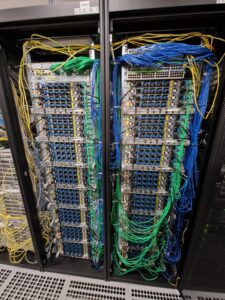
CLOS network, invented by Charles Clos (spine‑leaf topology) isn’t a buzzword — it’s a practical layout. Every device connects to a leaf switch, leaves connect to spines, and traffic between any two endpoints follows predictable paths. For live video that means consistent latency and less jitter, which is what keeps frames in sync. It also means you can add capacity by plugging in more leaves or spines instead of redesigning the whole network. For studios that grow or for events that suddenly need more channels, that modularity is a lifesaver.
What IP gives you that SDI doesn’t
SDI is simple and reliable for single links. IP gives you options SDI can’t:
- Efficiency: Multiple streams share the same infrastructure instead of each needing its own physical line.
- Automation: Reconfiguring a signal path can be a software command.
- Scale: Going from a handful of channels to dozens or hundreds is a network problem, not a wiring nightmare.