
Cisco Live Europe 2026 – All in on AI

For those of us who work with Cisco technology, Cisco Live is the event of the year. Cisco Live is held in several locations around the world throughout the year: Europe in winter, the US in summer and Australia in autumn. Over five days, you get knowledge updates, new product launches, the opportunity to see technology that fits into the ecosystem, and plenty of exercise, as the conference area is huge.
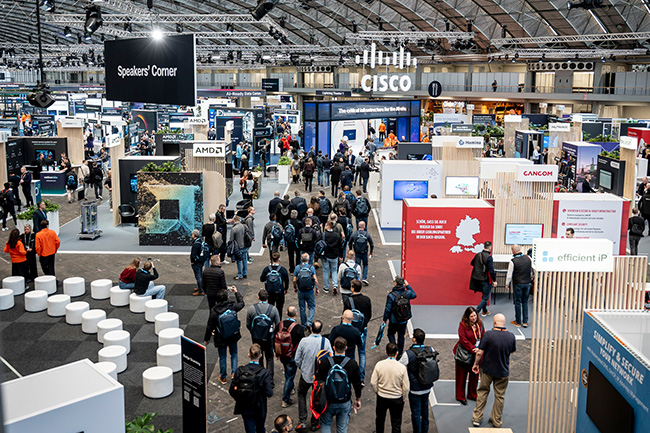
It is also a very social event, where you meet old colleagues and get to know new people who may become colleagues in the future. As Cisco partners, we also travel with customers, and there are many enjoyable dinners together.

This year, it was very clear that Cisco is ‘All In on AI’. From the keynote to conversations I had with executives, the talk was all about AI, AI Infrastructure, Agentic and AgenticOps. Most of the DevNet workshops and labs were about either automation or AI, or a combination of both.

Cisco has no doubt that AI is here to stay, and when we start to really utilise AI, it will have major consequences for the network and infrastructure we use. AI Inference (where we query the models) or AI Training (production of new models) can run on-premises or in the cloud, but even if we use cloud-based resources, local AI agents will demand more from the network than human use normally does.

There will be many agents, they will be specialised and they will communicate with each other. Cisco therefore envisages a campus network with a lot of activity, even when no humans are present. The AI agents will place demands on both bandwidth and latency. If you are going to perform advanced operations that are time-critical, you will also need computing power close to them, known as edge computing.

Cisco has solutions ranging from AI-ready network infrastructure in both data centres and buildings, to AI Pods and Compute for the new applications and agents we are going to build, and Unified Edge for AI Compute right at the edge. On top of this, Cisco has launched several tools to make it easier for us to set up and operate the solutions, from Nexus One to Intersight and Cisco Cloud Control.


Faster pace of change

The word ‘speed’ was used frequently in several of the keynotes I attended. Cisco has worked hard internally to speed up the development of new solutions and concepts, and their advice to everyone present was to pick up the pace. AI is going to transform just about everything, and at a speed we are not used to. It is up to each organisation to look at its own routines, processes and tools and take the necessary steps to pick up the pace.

Trust

One of the biggest obstacles to adopting AI right now is that we do not trust it. It is not easy to see how the next industrial revolution will happen when agents and LLMs cannot be trusted to provide consistent and correct answers without hallucinations. It is also difficult to take the plunge and give an agent tasks when it can be persuaded to give discounts on orders just by chatting with it a little. Here, it is natural to talk about the models and how they can be improved, but also how we can build security outside the model to protect it. Cisco AI Defense is Cisco’s answer.

Talent

Cisco has one of the world’s best education and certification programmes. CCIE and CCDE certifications are highly sought after and, for those of us who have one or more of them, a source of great pride. Throughout the conference, Cisco made it clear that it was the talents gathered there who would build the new AI infrastructure. AI will not replace knowledge, it will enhance it. Acquiring knowledge will never become obsolete, and it was very refreshing to see that Cisco was extremely clear on this point. But as with everything else, we must be more prepared than ever to learn new things, and more often.

Performance per Watt

One thing I noticed when I was walking around getting updates on the new hardware was that Cisco is promoting energy efficiency as a measurement parameter when launching new equipment. On the firewalls, they provided information about ‘Gbps protected per W’. This was interesting to see, and I believe Cisco will benefit from this type of communication and focus on energy efficiency.

Supply chains and delivery problems

Cisco, like the rest of us, is also noticing the shortage of RAM chips, SSDs and other key components in an AI data centre. This is challenging, even for the biggest players. We are entering a year where there will be a dramatic increase in the price of individual components, as well as longer delivery times. This will be particularly noticeable on servers. For network components, the situation is better for the time being.

This was a brief summary of my impressions of Cisco Live. What I am left with is really… Cisco talks a lot about AI, but it is basically ‘business as usual’; they deliver excellent networks and infrastructure. As usual, they are driving innovation and producing new hardware to meet tomorrow’s needs. AI places increased demands on the network, which affects all of us who want to use this new technology and the opportunities it offers us.